Financial Data Modelling & Valuation (Excel & Power BI)
- Build real-world financial models
- Create dynamic dashboards for business insights
- Perform company valuations and investment analysis
- Learn forecasting, scenario planning & decision-making


FM course overview:
Key Features:
- 40 Hours Instructor led Live class
- Real World case studies to understand actual problems
- Hands on Financial Models simulation for practical session
- Mentoring session from the seasoned expert
- Power BI one of the best automation tools to learn
- Unlimited doubt clearing session
Enquiry Form
Skills Covered
- Excel
- Spreadsheet management,
- Presentation and story telling,
- Forecasting
- Valuation
- Financial Analysis
- Sensitivity Analysis
- Financial reporting
- Auditing
- Analytical skills
- Budgeting
- Business Feasibility Test
Benefits
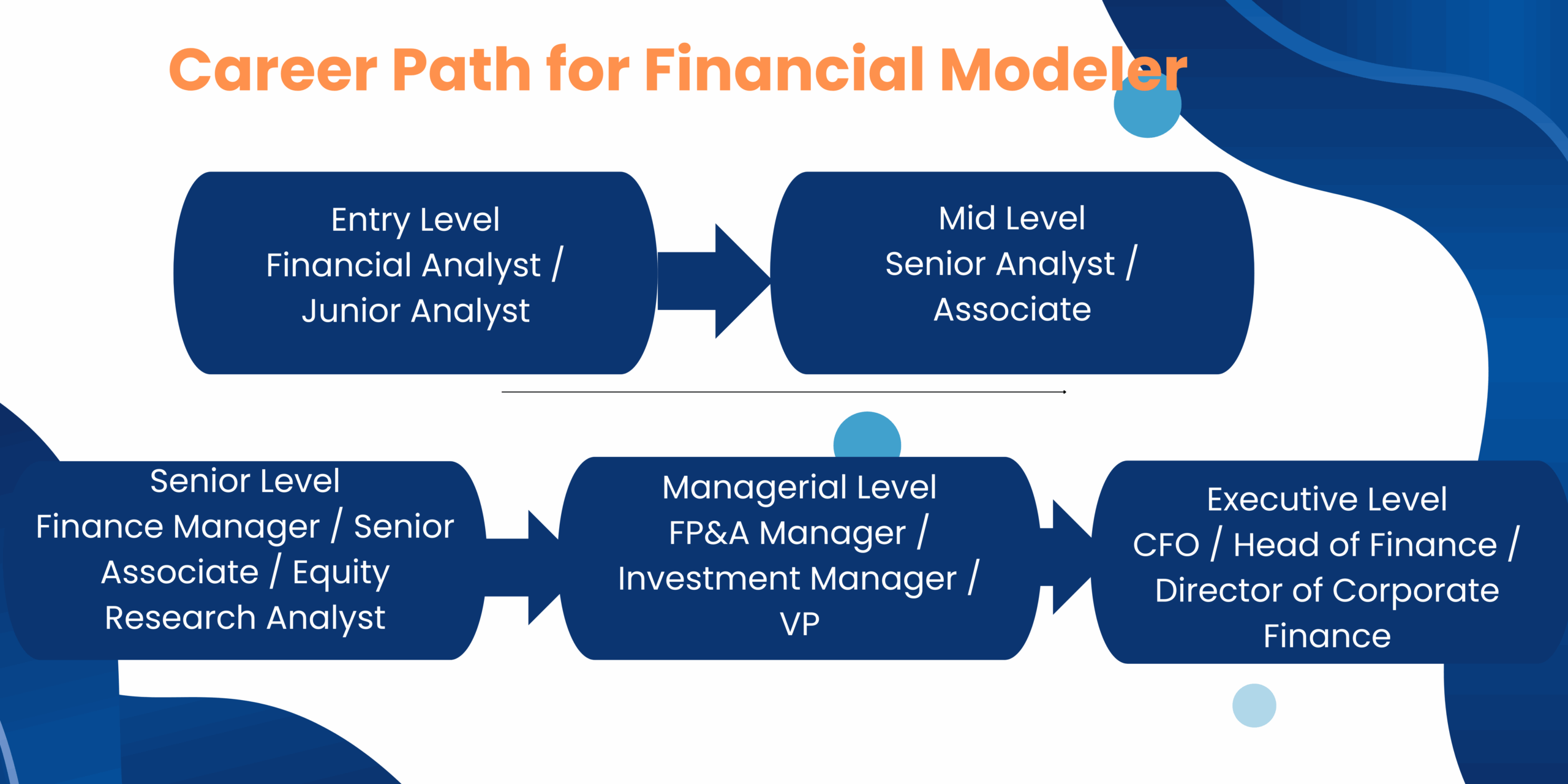


Financial Modeling Online Batches
Prerequisites
Some general prerequisites and recommendations to get started with financial modelling:
1. Basic Finance & Accounting Knowledge: A fundamental understanding of financial concepts such as financial statements and valuation methods is helpful.
2. Excel Proficiency: Excel is the primary tool used for financial modelling. It is a part of the syllabus, and basic familiarity with Excel can be helpful.
3. Industry Knowledge: If you plan to specialise in financial modelling for a specific industry (e.g., real estate, hospitality, infrastructure, technology etc.), having relevant industry knowledge will be beneficial.
Syllabus
- Freezing, sorting and conditional formatting
- Creating Hyperlinks through Excel function
- COUNT related functions
- Lookup based functions
(VLOOKUP, HLOOKUP) - Lookup based functions
(INDEX and MATCH) - SUMPRODUCT function and
related cases - Text related functions
- Date related functions
- Conditional summation (SUMIFS)
- Combining text from a range of cells (TEXTJOIN)
- Getting value from a database using
DGET function - Data summarization using Pivot
Table and Slicer - AGGREGATE function
- Financial functions and creating loan amortization
- Corporate finance essentials (Capital budgeting, Time
value of money, project evaluation methods) - NPV Crossover
- Evaluation in case of unequal lives
- Project evaluation cases
- Investment Banking
Overview
- What is financial modelling
- Developing an initial
financial model using Telecom case study - Capex
schedule - Drafting P&L
- Valuation - Applying DCF
- Working on Historical Statements
- Modeling
Assumptions for Future Action - Revenue Build-up
projecting the future revenues - Cost Build-up –
projecting the future cost - Asset and Depreciation
Schedules - Debt and Equity Schedules
- Modeling the
Financial Statements (P&L, BS and CFS) - Interest
income and breaking circularity
- Valuation related workings
- Cost of equity (CAPM)
and post-tax cost of debt - Computing WACC
- Absolute valuation: Performing valuation using DCF
(FCFF and Enterprise Value) - Relative valuation:
Comparable analysis - Performing sensitivity analysis
- Data visualization using charts
- Presenting historical &
projected data together - Creating profit & loss Bridge
- Depicting variance analysis
- Dynamic chart for
dashboards using form control option buttons and combo
box - Flexible chart using Scroll bar form control and
Excel's OFFSET function
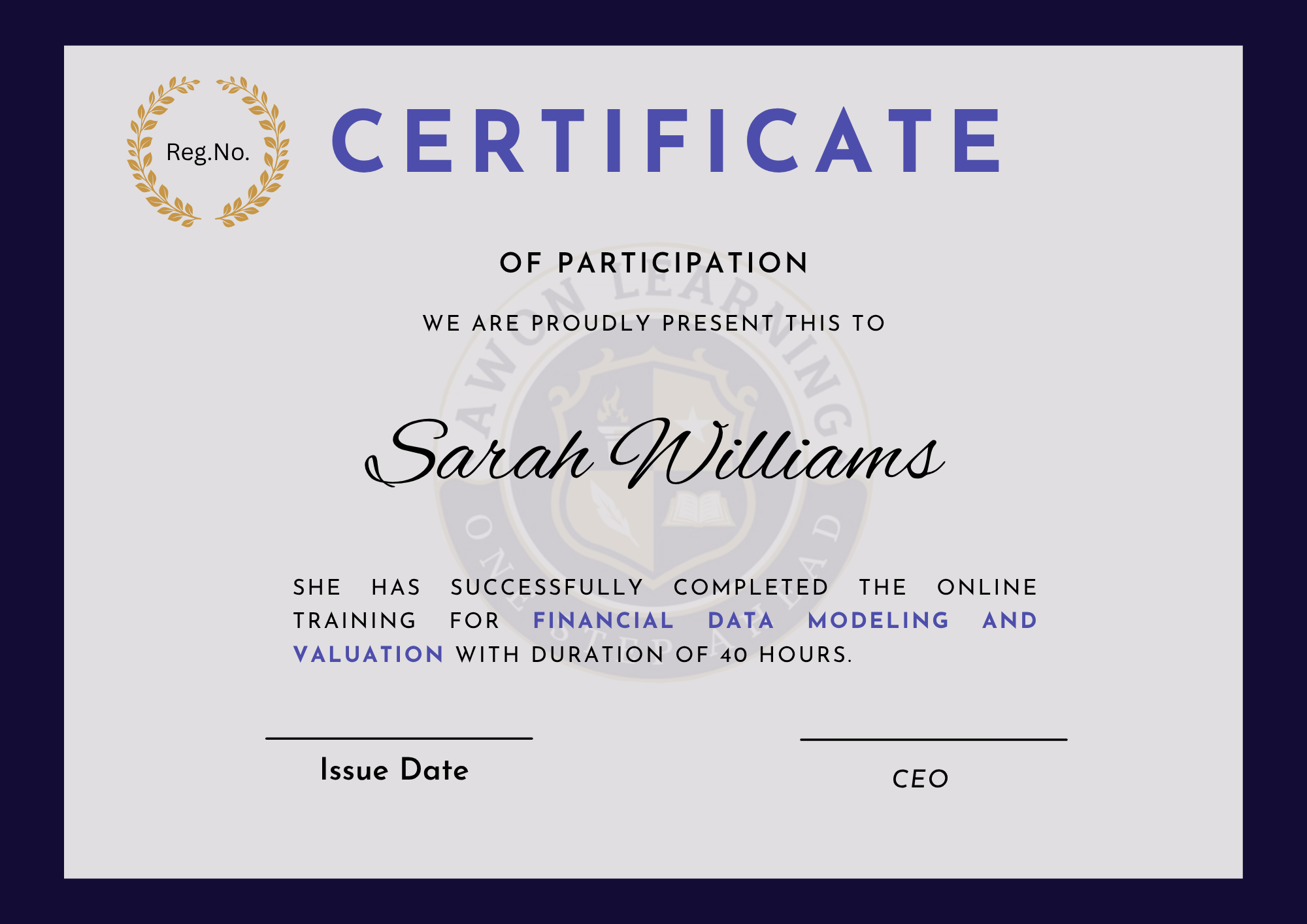
Demo Certificate
Jobs opportunity in the market/Financial Modelling Jobs
The finance market is dynamic, continually presenting fresh job opportunities. Individuals with a financial modelling certification can access job opportunities offering attractive compensation packages. Listed below are some typical finance modelling jobs
Financial Modelling Analysts use financial management skills
and knowledge to prepare financial models, typically using Excel spreadsheets. These
professionals have comprehensive knowledge of finance concepts, accounting principles,
and Excel tools, enabling them to assess the potential impact of financial decisions on a
company’s future projections.
Investment Bankers play a crucial role in facilitating various finance-
related transactions such as capital raising via debt or equity, mergers and acquisitions,
valuation of companies, corporate restructuring etc.
Equity Research Analysts conduct detailed research on different
companies and industries. They give their unbiased opinion to investors about a specific
company or industry based on their in-depth research.
A Credit Analyst’s key responsibility is to assess the credit risk of any debt-
related transaction. They access the creditworthiness of individuals, corporates, and entities
looking to raise debt from banks and institutions. Credit Analysts work in various financial
institutions such as banks, investment banks, rating agencies etc.
Financial Consultants are the go-to professionals for financial planning
and wealth management advice. The majority of such consultants are independent
professionals. Large business organisations often hire consultants to meet specific financial
goals such as fundraising through debt and equity, business restructuring, financial feasibility
of proposed new ventures etc.
A Finance Manager’s responsibility entails maintaining and keeping track
of cash inflows and outflows in an organisation, maintaining adequate liquidity in the
business, raising funds to meet short-term and long-term finance needs of the business, and
investing excess funds to maximise return for stakeholders, etc.
Financial Planners are certified money management professionals,
organisations and individuals. The planner suggests suitable investments to the client by
analysing the risk tolerance and goals of the business or individual.
What our learner says
Awon Learning’s Financial Modeling course helped me bridge the gap between theoretical finance and real-world analysis. The Excel-based valuation models and Power BI dashboards we built in class are tools I now use at work every day.
The training was practical, structured, and highly relevant to today’s business world. Awon Learning’s instructor explained valuation techniques, DCF modeling, and data visualization so clearly that even complex topics became easy to grasp.
Before this course, I struggled to connect financial theory with data-driven decision-making. Thanks to Awon Learning’s hands-on exercises and real-case scenarios using Excel and Power BI, I now feel confident in creating full-scale financial models.
This was not just a course—it was a skill transformation journey. The clarity of financial concepts and the way data modeling was taught step-by-step using Excel and Power BI made a huge difference in my career as an aspiring investment banker.
Exam, Certifications & FAQ
You can enroll for this course through multiple channels. You can visit our website or contact us
through Facebook, LinkedIn, or Instagram.
Complete your course successfully and attain a Certificate of Completion. Awon Learning offers a
Certificate of Excellence after you pass a mandatory online examination.
Once you register with us, you have access to course content for 60 days from the date of purchase.